An energy crisis raises household bills, but its lasting cost may be the investment it prevents. The textbook response is simple: more expensive fossil fuels should push firms towards cleaner alternatives. The evidence is less tidy. The same shock that strengthens the case for switching also squeezes margins and raises uncertainty, eroding the means to pay for it. The pressure to escape fuel-price dependence intensifies just as the capacity to escape it weakens. That tension is easiest to see on firms’ balance sheets.
Fossil fuel dependence can consume the financial resources needed to overcome it. Higher fuel prices strengthen the incentive to switch to green energy, yet rising operating costs and uncertainty can weaken firms’ capacity to finance that switch. In the EIB’s 2022–23 investment survey, 82% of EU firms identified energy costs as an obstacle to investment in more sustainable alternatives. Its analysis also associates combined concerns about energy costs and uncertainty with an 8-percentage-point lower likelihood of investing in climate action. Belgian industry illustrates the financing constraint: the European Central Bank finds that energy-intensive firms’ profit margins failed to recover even when energy prices fell in 2023, leaving them less equipped to finance decarbonisation internally. A crisis can prolong the dependence it makes more costly. Businesses face stronger motives to change while tighter profits and increased uncertainty constrain their ability to act. To see how far that vulnerability reaches, we must look beyond the single firm to the networks that connect firms.
Businesses inherit the energy dependence of their suppliers. A manufacturer purchases components whose production requires fuel, electricity and transport, allowing an energy shock to reach its costs through several routes. A sector’s economic influence depends partly on its position as a direct and indirect supplier to other industries, so disruption can run well beyond the firms initially affected. However, dependence does not necessarily produce cascading collapse. Alternative imports and adjustments in consumption and production helped Germany contain the damage of an energy crisis: gas consumption fell by roughly 20% between July 2022 and March 2023 relative to 2019–21. GDP grew in 2022, but energy-intensive industries suffered and output could have been higher without the shock. Production networks transmit disruption, yet access to alternative suppliers and inputs can absorb it. The question becomes whether firms can finance those alternatives before another crisis makes adjustment urgent.
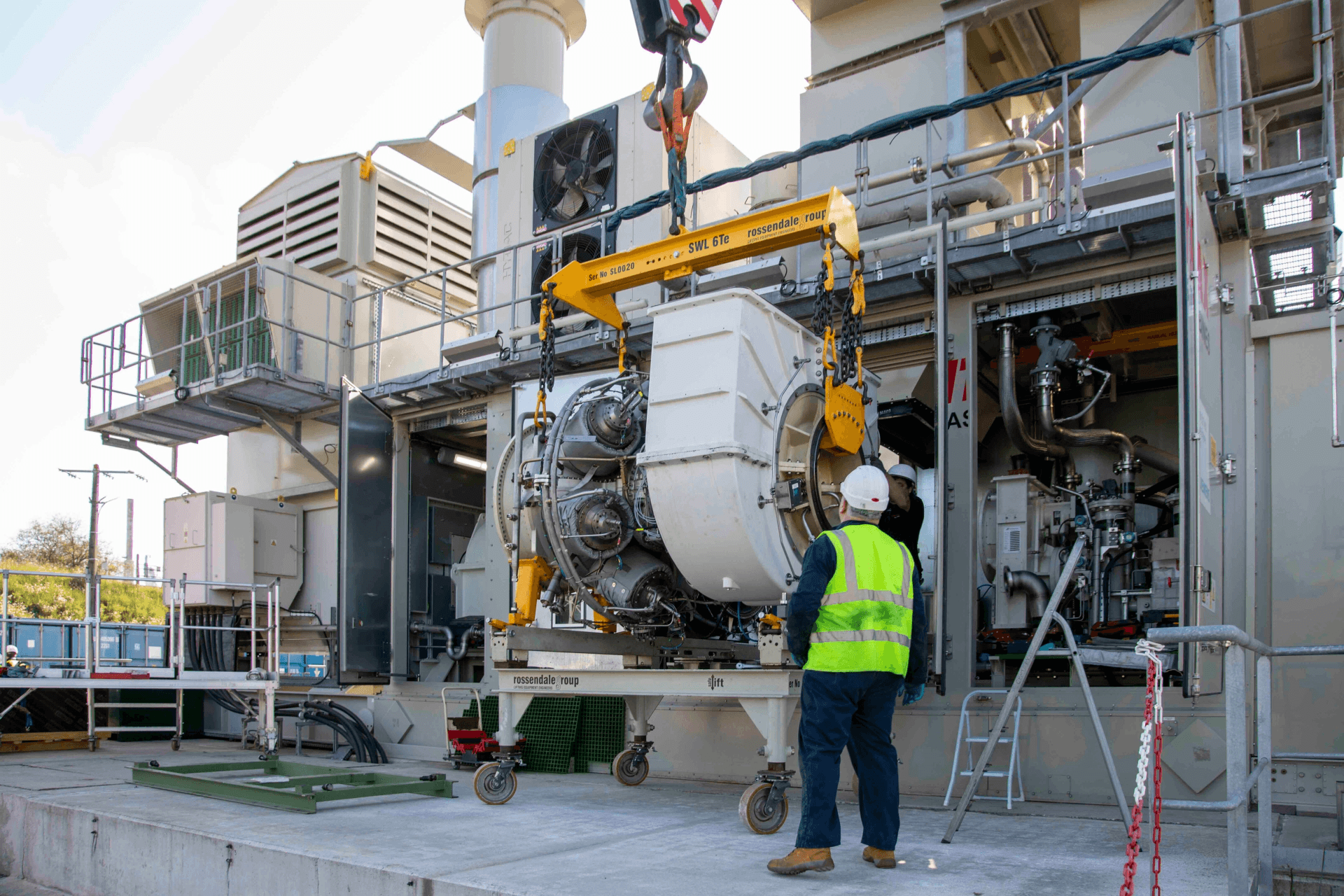
Green hydrogen shows what an alternative looks like before anyone has paid for it. Produced by splitting water with renewable electricity, it can replace fossil inputs in selected industrial processes, including steelmaking, while providing a means of storing renewable energy for later use. Though storage and industrial demand are central to hydrogen’s potential, inexpensive renewable electricity does not necessarily produce inexpensive hydrogen. Regardless, modelling suggests that green hydrogen can become competitive with gas-based blue hydrogen when carbon pricing accounts for their different lifecycle emissions. Substitutability must be built into production through investment in electricity supply, equipment and infrastructure. Hydrogen strengthens the case for financing alternatives before a crisis.
Counting those lifecycle emissions connects hydrogen to a broader question about ecological limits. Assessing emissions throughout production and supply shows why a fuel’s environmental performance cannot be inferred from its label alone. At least six planetary boundaries were exceeded in 2022, while around 9% of humanity still lacked electricity. Applied to hydrogen, this suggests a more demanding investment test: does a project provide an affordable alternative while reducing emissions and other resource pressures throughout its supply chain? Effectively replacing fossil dependence should improve the conditions supporting prosperity rather than simply reallocate its costs.
Price changes encourage movement, but they cannot serve as a tool that regulates economic stability. A price spike alone cannot assist firms in transitioning towards more sustainable energy sources. Production networks show how effects of a crisis spread across the supply chain, but financing decides whether the economy can adjust accordingly. An economy that waits for prices to manage the transition pays both in higher energy bills and forgone investment.
That is why success needs a wider measure than cost and growth. Global GDP more than doubled between 2000 and 2022, yet median ecological overshoot rose from 75% to 96% beyond safe limits, while the median share of humanity in social shortfall fell only from 47% to 35%. The burden is also uneven: the richest 20% of nations, with 15% of the world’s population, generate over 40% of annual overshoot, while the poorest 40%, with 42% of the population, bear over 60% of the social shortfall. Energy systems should therefore be judged on three tests: resilience to shocks, the distribution of burden, and pressure on ecological limits.
A regenerative approach would assess investment against those limits and against access to energy, and finance the infrastructure that gives alternatives. Hydrogen illustrates the principle: its contribution depends on how the surrounding system is designed. Financing needs to be directed towards meeting human needs within planetary boundaries. The price of energy today should not dictate our capacity to withstand tomorrow.
Arzygul Yarjanova is a writer with the Consilium. A Business and Economics student, she writes biweekly, primarily focusing on sustainability, energy, and geopolitics.