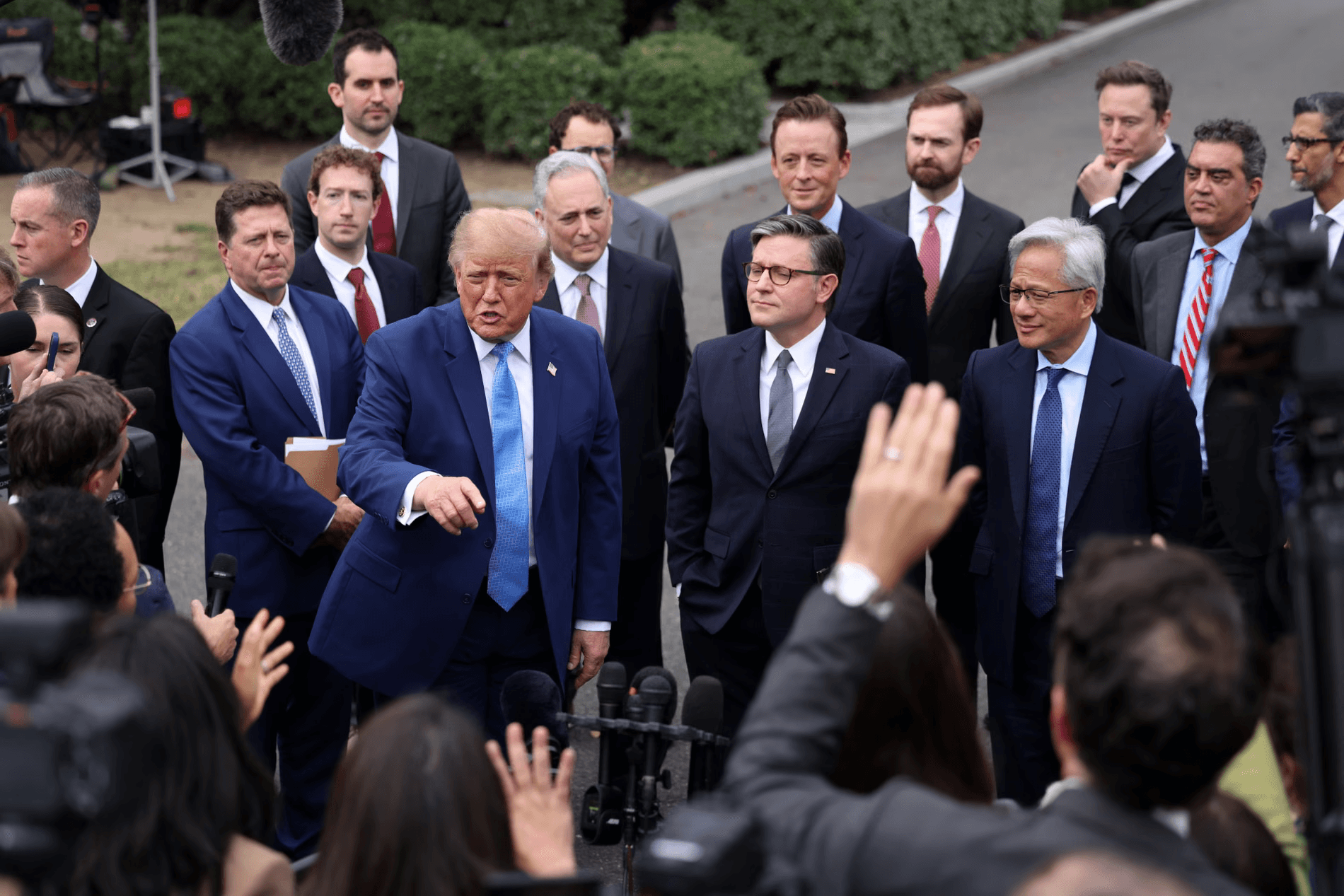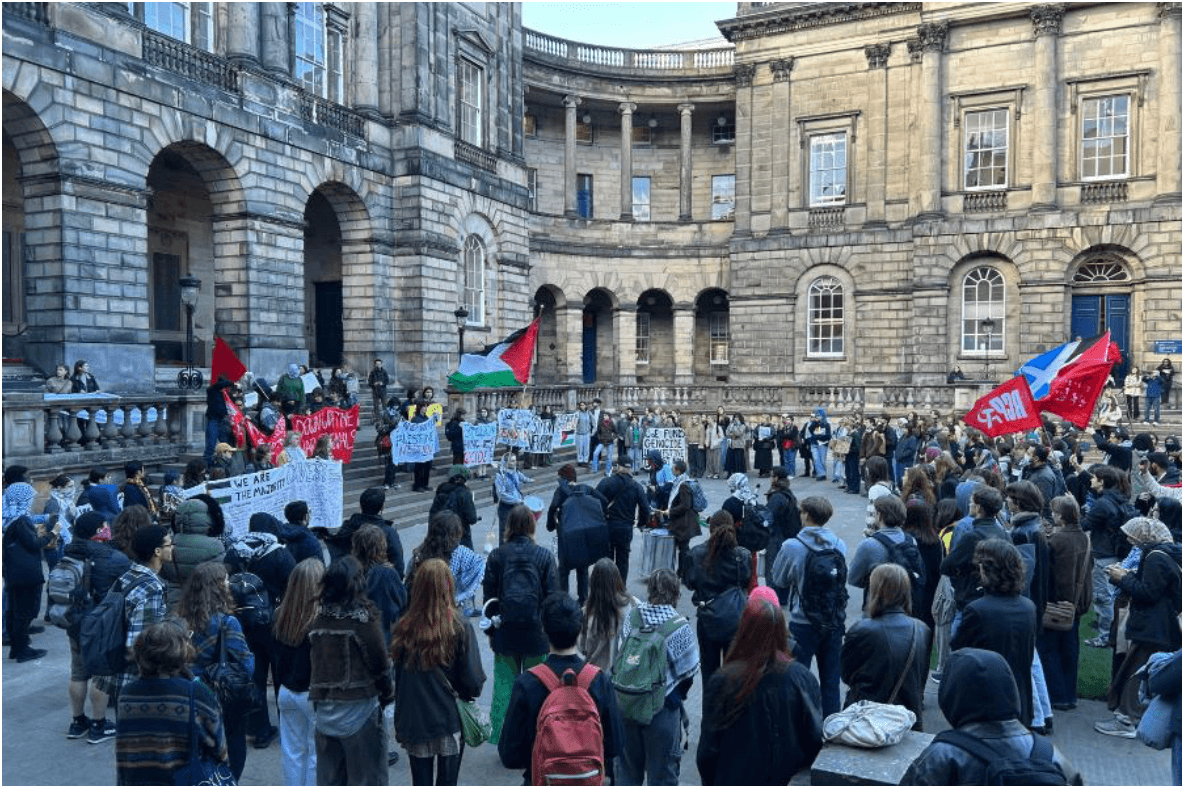
In India, a student-led movement that began in New Delhi on June 7th spread across the country and, on July 25th, pushed out the education minister over exam-paper leaks. In France, 56,000 people marched in Paris on October 6th as pupils blockaded schools over overcrowded classrooms and missing teachers. In Edinburgh, too, students occupied the Gordon Aikman lecture theatre as part of a divestment programme and stood alongside staff on strike over £140 million of cuts and compulsory redundancies. This communicates the message in different contexts : Gen-Z has stopped asking politely.
However, the cost of dissent is not laid out evenly. About two in five Edinburgh students are international and they pay £28,000 a year for classroom-based degrees, fifteen times the £1,820 fee paid by the government for a Scottish undergraduate. Economists call this price discrimination–one product sold to different groups at different prices–and it works best on the group with the least room to bargain. The students who extensively fund the university are also those with the weakest hold on their right to be there. Their student visa functions as a tied contract, and tied contracts quiet the people who hold them.
Part of the reason why the international fees are high is because of the gap built into the system. Going plainly by the numbers, a joint review by the Scottish Government and Universities Scotland found that public funding covered only 82% of the cost of teaching home students in 2023-2024, a £288m shortfall. Public funding further leaves 28% of research costs up to tuition. International students are, in effect, the cross-subsidy that keeps the university affordable. According to the economic model of an ordinary market, a customer this important should have bargaining power. However, this one has a visa.
The leverage has a long history. The textbook case of a tied contract is the Gulf’s kafala system which binds a migrant worker’s legal status to a sponsor, usually their employer, who decides whether they can change jobs or even leave the country. The largest groups among the nearly 35 million foreigners in the six Gulf states come from the Indian subcontinent, Africa and South-east Asia, and Saudi Arabia’s 2025 abolition was expected to affect some 13 million workers. The ILO has long warned that such systems leave workers open to forced labour. The mechanism is simple: when leaving costs more than staying, whoever holds your status can ask for your silence without ever asking aloud.
A student is not a kafala worker, and the analogy is imperfect. Students, on principle, can change universities, but doing so mid-degree is slow and requires another university to accept a transfer. Here, two parties hold power over them—the university that sponsors their visa, and the Home Office that grants it. When the regulator pulled London Metropolitan University’s right to sponsor international students in 2012, some 2,700 students faced the threat of removal for something the institution had done. Leaving isn’t cheap either: at Scottish universities, some international students pay more than £100,000 over a four-year degree. The money is spent before anything goes wrong, so when it does, the leverage sits with everyone but the student.
Even when the lever fails, it is heavy. Dana Abuqamar, a Palestinian Law student at the University of Manchester, had her UK student visa revoked in December 2023 after a television interview about October 7th. In late 2024, a tribunal found the Home Office had not shown that her presence was against the ‘public good,’ calling the decision a disproportionate interference with her free speech, roughly taking eleven months. Öztürk, a Tufts doctoral student, had her visa cancelled after co-authoring a campus op-ed and was held in detention for six weeks in 2025. Her case ended in April 2026 with a settlement that dismissed the proceedings and acknowledged she had been in lawful status throughout, but by then she had returned to Turkey. Whatever one makes of what either said, both cases against them failed, and in both the process became the penalty.
The pattern shows up well beyond these cases, too. The Office for Students’ 2026 survey of English universities found that 45% of international students felt able to raise controversial ideas at political gatherings on campus, against 53% of UK students. The report does not cover Edinburgh, but the direction is clear. Edinburgh’s own statement on freedom of expression, introduced in 2020, sets out how vital free expression is to a university such as itself. The same university also holds a sponsor licence from the Home Office and answers to it for every international student it enrols. A free-speech policy protects what students may say on campus. It does not bind the Home Office, which decides whether they stay.
Albert Hirschman argued that people unhappy with an organisation have two options: exit or voice. Voice is how an institutions learns that they are failing, which is why the protests in the opening paragraph mattered. Exit costs a year and a fee, and voice costs a visa risk. The loss is shared, because international students often hold a view of the institution that no one born here can supply, and the institution hears less of it.
Dissent is a public good, and it is under-provided when those best placed to supply it face the highest cost.
Gurmehar Kaur is a writer with the Consilium.